Is It Safe to Sell a Junk Car? What to Know
Last Updated: November 5, 2026
Quick Summary
Yes, it is safe to sell junk car if you vet the buyer, confirm the payment clears, and finish the title paperwork before the vehicle leaves your driveway. The risk is not the sale itself but skipping one of those three steps, so treat it as a business transaction rather than a favor.
Ask for the legal business name, physical address, and a phone number answered during business hours.
Get quote terms in writing before pickup, including whether the price is locked and who pays towing.
Never send title, registration, or license photos before a verified in-person appointment.
Verify payment clears before the car is loaded, and never reverse the order of payment, paperwork, then vehicle.
Keep a signed bill of sale and notify your state motor vehicle agency after the sale.
Table of Contents
Is It Safe to Sell a Junk Car? The Short Answer
Yes, it is safe to sell junk car, provided you vet the buyer, confirm the payment clears, and finish the title paperwork before the vehicle leaves your driveway. The risk is not the sale itself. The risk is skipping one of those three steps. At I Buy Junk Vehicles, we have been serving Texas since 2010, and problems in vehicle sales commonly trace back to a handshake deal with no paperwork.
Here is the core of it: selling a junk car is a business transaction, not a favor. Treat it like one and most danger disappears.
A few things make a sale risky:
A buyer who refuses to show a license or business information
Payment in a form you cannot verify
A title or bill of sale you signed but never completed
A stranger arriving alone with no tow equipment
Get those right and the process is about as safe as selling anything else of value. For a full walkthrough of the whole process, see our guide on how to sell my junk car for cash.
How to Vet a Junk Car Buyer Before You Book Pickup
Vetting takes ten minutes and prevents most bad outcomes. The goal is to confirm three things before anyone schedules a pickup: that the buyer is a real, accountable business; that the quote terms are in writing; and that you know exactly who is coming to your property and when.
**1. Cross-check the name against your state's business registry and the Texas Department of Motor Vehicles guidance on vehicle transfer and title requirements.
2. Get the quote terms in writing before pickup. Ask specifically: Is this price locked, or does it change when you see the car?
3. Ask who handles the paperwork and who signs what. The answer should be "we do, together, at pickup", title assignment, bill of sale, and a copy of the buyer's ID.
4. Confirm who is coming and when. Get the driver's name, the tow company name, and an arrival window. Ask whether the driver will have photo identification and whether the truck is a flatbed or wheel-lift.
5. Protect your personal information during the quote. You do not need to send a photo of your title, your registration, or your driver's license to get a quote.
6. Plan the meeting for your safety, not just convenience. Schedule pickup in daylight, at your home or a public location you choose, and have a second adult present.
A buyer who passes these checks is not a guarantee, but it filters out most of the bad actors before they ever reach your driveway. For the payment and handoff side of the same transaction, see the next section.
Spotting Junk Car Buyer Scams Before They Cost You
Junk car buyer scams follow a handful of patterns, and each one has a tell. Learn the tells and you will spot them in the first phone call.
The bait-and-switch quote. A high phone quote drops on arrival. Ask upfront: "Is this price locked, or does it change when you see the car?" Get the answer in writing.
The overpayment trick. A "buyer" sends a check for more than agreed and asks you to wire back the difference. The check bounces. You lose the difference.
The title phish. Someone asks for your title, registration, or personal details "to prepare a quote." Never send documents before a verified appointment.
The no-show fee. A "free" pickup that suddenly costs money once the car is on the hook.
The Federal Trade Commission warns consumers about vehicle-history and payment scams, and the same caution applies here. For a checklist to run before you commit, see our guide on avoiding bait and switch junk car buyers.
Junk Car Pickup and Payment: What a Safe Handoff Looks Like
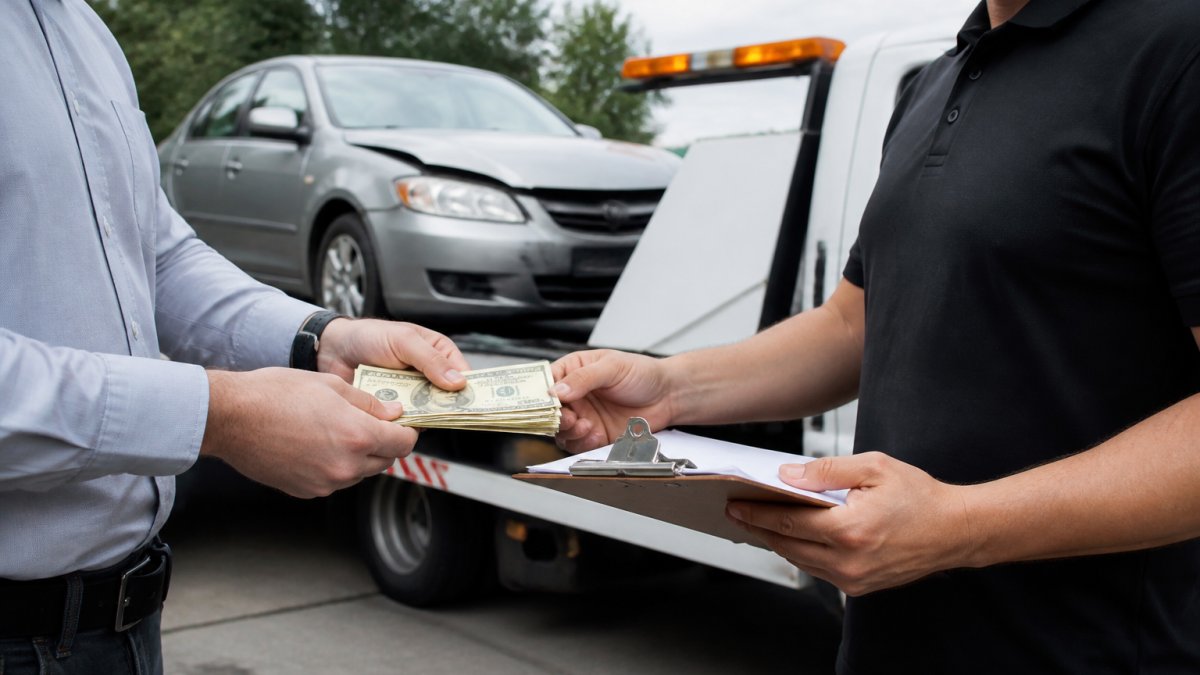
A safe handoff is simple in principle: payment clears first, paperwork is signed second, the car leaves third. Never reverse that order.
Verify the payment before the vehicle moves.
Cash. Count it in front of the driver before the car is loaded, and confirm the total matches the written quote. Ask for a receipt on the buyer's letterhead or a signed bill of sale showing the amount paid.
Cashier's check or money order. A cashier's check is not the same as cash. Call the issuing bank using the number on the check, not a number the buyer gives you, and confirm the check is valid and the funds are available before releasing the vehicle. A common scam is a counterfeit cashier's check that clears provisionally and bounces days later (the FTC).
Electronic transfer or peer-to-peer payment. Confirm the funds have actually landed in your account and are not "pending" or "on hold" before the tow truck leaves. Screenshots of a payment confirmation are not proof; your own account balance is.
Personal check. Do not accept one at pickup unless you are willing to hold the title until it clears. Most reputable junk car buyers will not ask you to.
Watch out: The overpayment trick is the most common payment scam in vehicle sales. A "buyer" sends a check for more than the agreed price and asks you to wire back the difference or pay the "towing agent" in cash.
Run the handoff in this order.
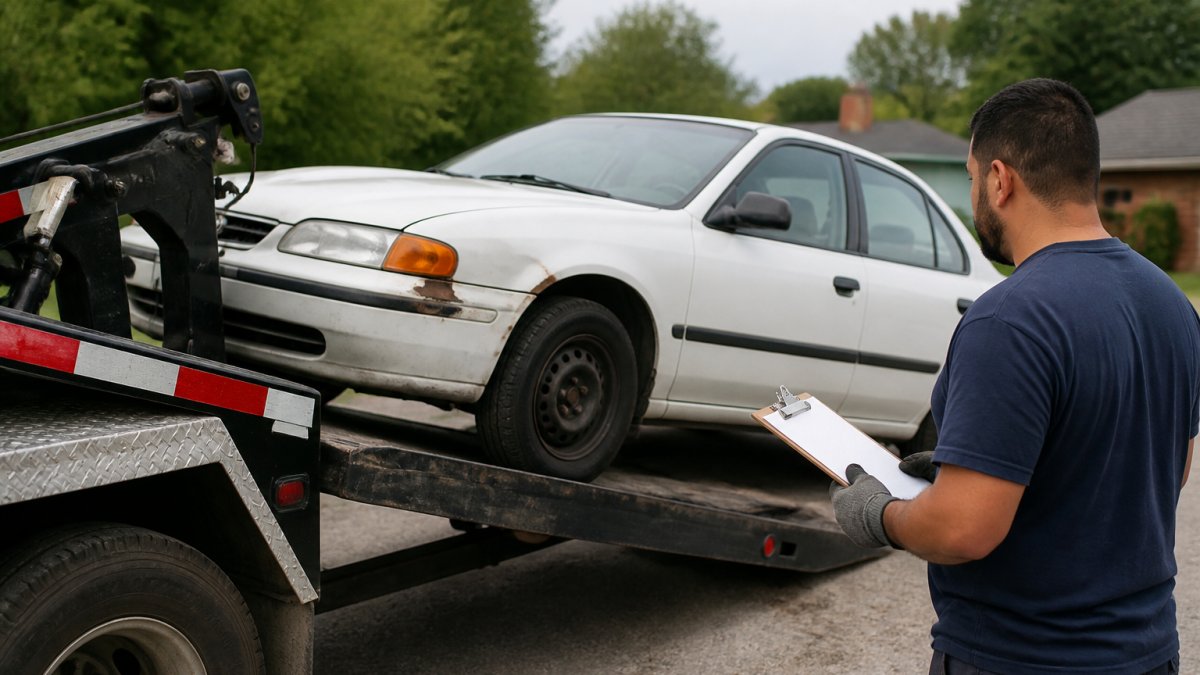
The driver arrives with a tow truck and photo identification. Match the name to the person you vetted.
You confirm the final price matches the written quote, and you verify the payment as described above.
You both complete and sign the title assignment and the bill of sale. Record the date, time, sale price, and payment method.
You photograph or copy the buyer's driver's license and keep a copy of every document, including the signed bill of sale.
You remove license plates, toll tags, registration stickers, parking permits, and all personal items from the vehicle, including the glovebox, center console, trunk, and any aftermarket electronics.
The vehicle is loaded and leaves. You keep the keys only if the buyer does not need them; otherwise hand them over last.
Clear your data before the car leaves. Modern vehicles store more personal information than most sellers realize.
Notify your state after the sale. Keep your copy of the bill of sale and title transfer, then report the sale to your state motor vehicle agency. This step protects you from tolls, tickets, and liability tied to a car you no longer own.

If you are worried the quoted price will change on arrival, read our explainer on whether a junk car buyer price changes upon arrival and what to do if it does.
Here is how each payment method should be verified before the tow truck leaves with your car.
Payment method | How to verify | Key risk |
Cash | Count it in front of the driver before loading | Total must match the written quote |
Cashier's check or money order | Call the issuing bank using the number on the check | Counterfeit check that bounces days later |
Electronic transfer or peer-to-peer payment | Confirm funds landed in your account, not pending | Screenshots are not proof of payment |
Personal check | Hold the title until it clears | Most reputable buyers will not ask for one |
Selling a Junk Car Without a Title: What You Can and Cannot Do
Whether you can sell a junk car without a title depends on your state and the buyer. That does not make the paperwork optional.
Documentation requirements vary by state. Confirm what your state requires before the pickup.
What you cannot do is sell a car you do not own or hide a lien. That is where sellers get into legal trouble. Our full guide on selling a junk car without title walks through the state requirements step by step.
The Junk Car Bill of Sale and Paperwork That Protects You
When you sell junk car, a bill of sale is your proof the vehicle changed hands. It protects you from liability if the car is later abandoned or involved in an incident. Every sale should include one.
A solid bill of sale records:
Seller and buyer names and contact details
Vehicle make, model, year, and VIN
Sale price and payment method
Date and time of transfer
A statement that the vehicle is sold as-is
Both signatures
Pair it with the title transfer and a copy of the buyer's ID. Keep your copy for years. Then notify your state motor vehicle agency that the vehicle is no longer yours, which removes you from future registration and toll liability.
Get a Quote From a Local Junk Car Buyer
Getting a quote takes minutes and costs nothing. The key is to compare the full offer, not just the headline number.
Have this ready before you call:
Year, make, and model
Whether it runs, and any major damage
Whether you have the title
Your location and how soon you need it gone
At I Buy Junk Vehicles, we offer instant quotes, free towing, and same-day payment on vehicles in any condition, including non-running and no-title cars. We have served Texas since 2010. As one Houston customer put it, "Tyler was very communicative and timely on the day of the pickup... He made us a fair offer on the spot." For a step-by-step walkthrough, see how to get an instant quote for a junk vehicle.
Frequently Asked Questions
Is it safe to sell a junk car for cash?
Yes, when you deal with a verified buyer and confirm payment before the vehicle leaves your property. Ask for the buyer's business license or registration, get the offer in writing, and insist on payment at pickup rather than later. Never hand over the keys and title until you have the money in hand. A legitimate junk car buyer will not pressure you to skip the paperwork or accept a delayed payment.
What paperwork do I need to sell a junk car?
At minimum you need proof of ownership, such as a certificate of title or registration, plus a junk car bill of sale signed by both parties. Include the vehicle identification number, sale date, sale price, and both parties' names and signatures. Keep a copy for your records and check your state's requirements for reporting the sale and canceling registration.
How can I tell if a junk car buyer is legitimate?
Look for a physical business address, a working phone number, and reviews that mention actual pickup experiences. A reputable buyer gives you a written quote, explains what affects the final offer, and does not demand a fee upfront or ask you to sign over the title before payment. Watch for junk car buyer scams like quotes that drop sharply on arrival with no explanation or requests to pay a release or towing fee.
Can I sell a junk car without a title?
It depends on your state. Some states allow a junk car buyer to purchase a vehicle without a title if you provide alternative proof of ownership and complete the required forms, while others require a replacement title first. Call your state motor vehicle agency to confirm the rule before you book a pickup. A buyer who says a title is never needed, in any state, is a red flag.
Selling a junk car safely comes down to three things: a verified buyer, verified payment, and completed paperwork. If you want a buyer who handles all three, I Buy Junk Vehicles offers instant quotes, free towing, same-day cash payment, and help with the title and bill of sale at pickup. Get started with I Buy Junk Vehicles and turn that driveway space into cash.

Comments