Get Instant Quote for Junk Vehicle: Step-by-Step
Table of Contents
What You Need Before You Get an Instant Quote for a Junk Vehicle
Vehicle Details That Decide Your Offer
Paperwork and Ownership Basics
How to Request Your Quote by Phone Call or Online Form
The Vehicle Information Checklist That Produces an Accurate Quote
Photos That Speed Up the Quote
How Junk Car Buyers Calculate Your Cash Offer
Scrap Value: Weight Times Metal Price
Parts Value: What Still Has a Buyer
Towing Cost and Location
Demand and Timing
Can You Sell a Junk Car Without a Title?
Junk Car Removal With Free Towing: What to Expect
The Junk Car Pickup Process From Quote to Cash Payment
Quote Validity, Bait-and-Switch Traps, and Safe Payment Steps
Frequently Asked Questions
Last Updated: October 21, 2026
What You Need Before You Get an Instant Quote for a Junk Vehicle
You can get an instant quote for junk vehicle pickup in under a minute if you have the right details ready.
Junk vehicle quotes are not guesses. Buyers weigh the vehicle's weight, salvageable parts, and towing cost against scrap value, so the information you provide up front decides how close the final offer lands to the number you were quoted.
Below, we break down what to have on hand, how the math works, and what to expect from pickup to payment.
Key Takeaway The more accurate your vehicle details, the tighter your quote. Vague answers force buyers to estimate low to protect themselves.
Vehicle Details That Decide Your Offer
Four details drive most of the offer: year, make, model, and condition. A buyer needs all four to run a junk car value calculator against current scrap and parts pricing.
Year, make, and model identify the vehicle and its parts demand
Condition separates a repairable car from a true scrap vehicle
Completeness matters too, so note whether the engine, transmission, catalytic converter, and wheels are still there
Missing parts lower an offer. A vehicle with no catalytic converter or a stripped interior is worth less than a complete one, because the buyer cannot recover as much value.
Paperwork and Ownership Basics
Have your title or ownership documents ready before you request a quote. A clear title speeds up the sale, and it settles the most common question we hear: whether a car without a title can still be sold.
If you do not have the title, tell the buyer up front. Many buyers, including us, work with no-title vehicles, but the process differs and you will need to confirm your ownership another way.
How to Request Your Quote by Phone Call or Online Form
Requesting a quote takes two fast paths: a phone call for a live conversation and answers on the spot, or an online form to submit vehicle details without waiting on hold. The difference between a quote that holds and one that shrinks at pickup is almost always how completely you filled in the vehicle details.
Here is how each route works.
Online quote form: Enter year, make, model, condition, and your contact details. Most buyers return an instant quote within seconds. Fill every field, even the optional ones, because blank fields force the buyer to estimate low.
Phone call: Speak with a representative, describe the vehicle, and get a quote amount read back to you. Read from your notes rather than recalling details on the spot.
Confirm the details: Repeat back the year, make, and model so nothing gets logged wrong, and ask the representative to read the quote back to you in writing by text or email.
Lock in pickup: Choose a pickup window that works for you, and confirm whether the quote is contingent on an on-site inspection.
The Vehicle Information Checklist That Produces an Accurate Quote
A buyer who has to guess fills the gaps with conservative assumptions. Gather these details before you call or open the form:
Year, make, model, and trim, the trim level affects parts demand more than most sellers realize.
Mileage, read it from the odometer if the vehicle still powers on; note if it does not.
VIN, the 17-character vehicle identification number, visible on the driver-side dashboard through the windshield or on the door jamb sticker. The VIN lets the buyer confirm engine size, drivetrain, and factory options without guessing.
Photos That Speed Up the Quote
Most buyers accept photos by text or upload, and a clear set reduces back-and-forth. Take these six shots in daylight:
Front three-quarter view showing the whole vehicle.
Rear three-quarter view.
Driver-side profile.
Odometer and dashboard with the ignition on, if possible.
Engine bay.
Any damage, rust, or missing-part area close up.
Include a photo of the VIN plate or dashboard VIN and a photo of the title if you have it. Buyers use these to confirm the vehicle matches the description, which is exactly the check the driver will repeat at pickup.
Pro Tip Ask the buyer to send the quote in writing, text or email, with the amount and any conditions. A written quote is easier to hold a buyer to than a number you remember from a phone call.
Whichever route you choose, keep your phone nearby. A quick confirmation call often turns a quote into a same-day retrieval, and having the checklist and photos ready keeps the number from moving when the driver arrives.
How Junk Car Buyers Calculate Your Cash Offer
A cash offer is built from three numbers: scrap value, parts value, and towing cost. Buyers estimate the vehicle's weight, check which parts still hold resale value, then subtract retrieval cost. Understanding how each number is produced is the best defense against a quote that looks generous on the phone and shrinks in the driveway.
Scrap Value: Weight Times Metal Price
Scrap value is the baseline: the vehicle's weight in tons multiplied by the current price per ton for mixed scrap steel, adjusted for what the buyer's yard actually pays.
Scrap-metal prices move with the commodities market, so the same vehicle can quote differently from one month to the next. A buyer who quotes a firm number should be able to tell you what metal price the offer assumes.
Parts Value: What Still Has a Buyer
Parts value adds on top of scrap when components can be resold or reused. The parts that most often move the number:
Catalytic converter, contains platinum-group metals and is one of the highest-value components on a junk vehicle.
Engine and transmission, valuable if they run or can be rebuilt, and worth core value even when they do not.
Aluminum wheels and alloy rims, priced separately from the steel body.
This is why two buyers can quote different numbers for the same car: one may have a use for the parts, another may only see scrap.
Towing Cost and Location
Towing cost is the deduction, and it is why local buyers can often offer more than distant ones. A buyer factors in round-trip fuel, driver time, and equipment. A vehicle on a paved driveway a few miles from the yard costs little to collect; one in a backyard, behind a fence, or far outside the service area costs more, and that difference shows up in the offer.
Demand and Timing
Demand is the quiet variable. Parts demand for a given make and model rises and falls with how many are still on the road and being repaired, and seasonal yard volume can affect offers. None of this is a reason to distrust a quote, it is a reason to ask what the quote assumes.
Key Takeaway A quote you can explain is a quote you can trust. Ask the buyer to walk through the weight, the parts they counted, and the towing distance behind your number.
Comparing multiple offers is smart, as long as you compare the final pickup price, not just the headline number. A slightly lower quote with genuinely free towing and same-day payment can net you more than a higher quote that deducts a tow fee at the door.
Pro Tip Ask the buyer what their quote is based on. A buyer who can explain the scrap and parts math is usually the one who honors the number at pickup.
Can You Sell a Junk Car Without a Title?
Yes, you can sell a junk car without a title in many cases, but requirements vary by state and buyer.
If your title is lost or the vehicle was inherited, ask the buyer what documentation they accept before you commit. Common alternatives include a bill of sale, registration records, or a lien release.
The key is transparency. Disclose the missing title during the quote, not at pickup.
Junk Car Removal With Free Towing: What to Expect
Free towing means the buyer covers the cost of retrieving the vehicle, so you pay nothing to have it hauled away. For a non-running car, that matters: arranging your own tow costs money and time.
Here is what junk car removal with free towing typically involves:
Scheduling: You pick a pickup window that fits your day
Access check: Tell the buyer if the vehicle is in a driveway, yard, or tight space so the right truck is sent
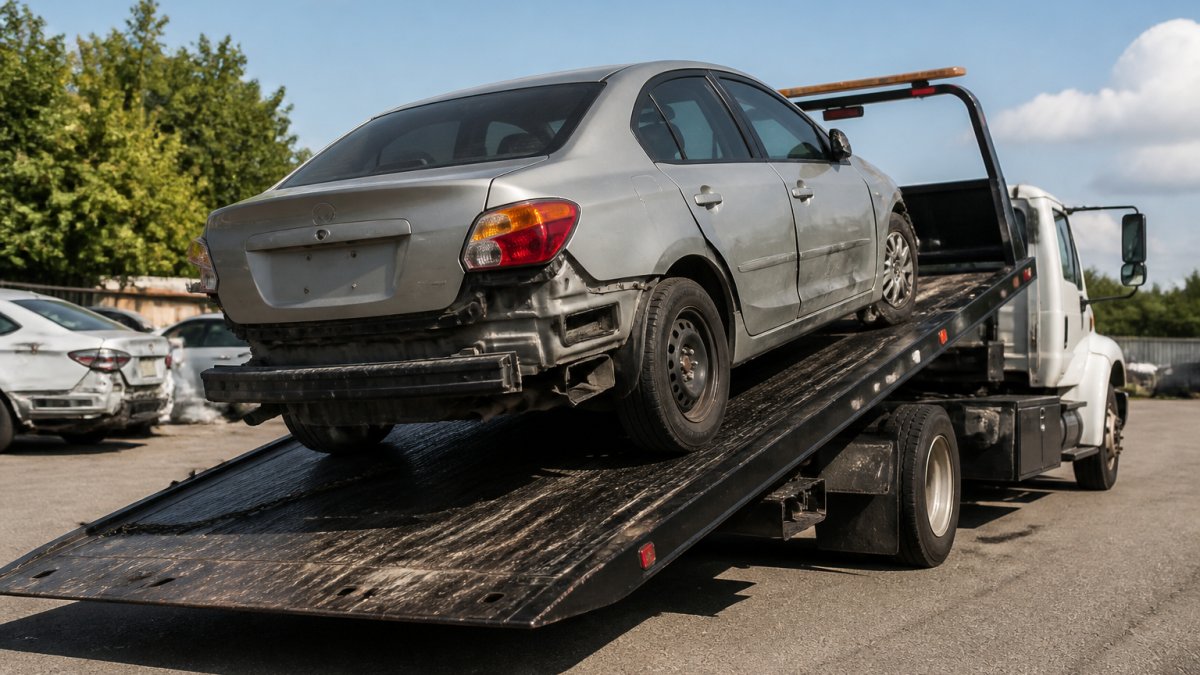
Removal: The driver loads the vehicle and handles the haul
Confirm before pickup that towing is genuinely free and that no hidden fees apply. A reputable buyer states this plainly.
The Junk Car Pickup Process From Quote to Cash Payment
The junk car pickup process runs from your accepted quote to cash in hand, usually in a single visit. Here is the sequence we follow.

Accept the quote and schedule a pickup time.
Prepare the vehicle: remove personal belongings, and have your keys and paperwork ready.
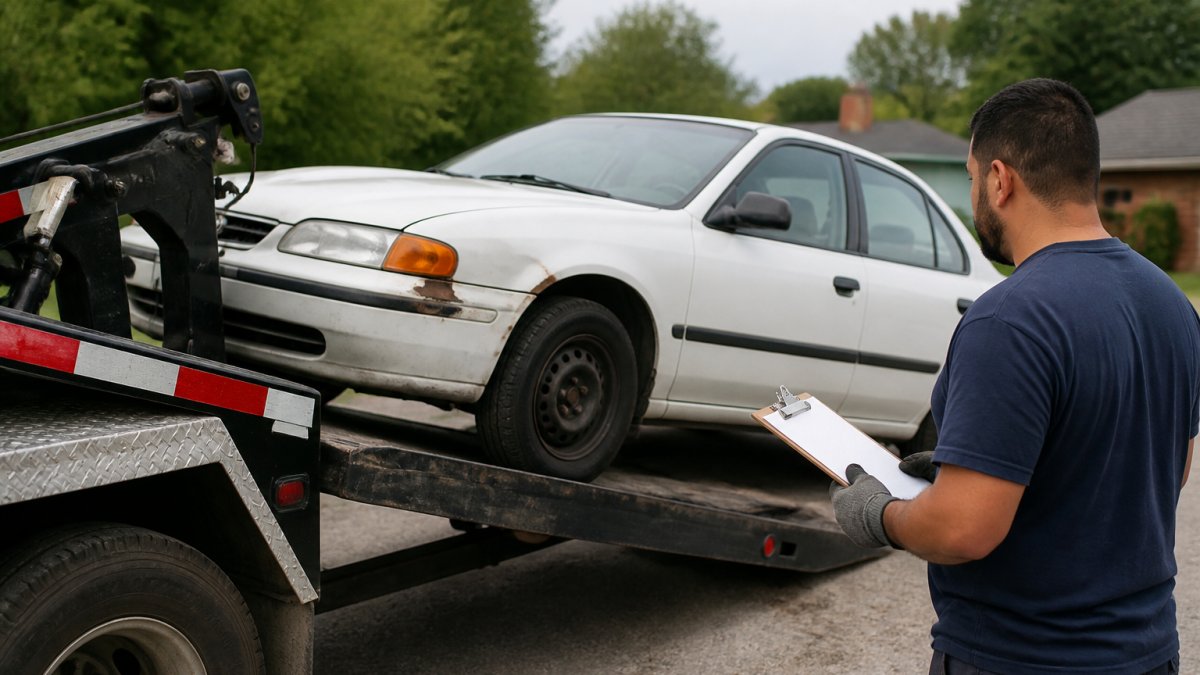
Driver inspection: the driver confirms the vehicle matches the details you provided.
Sign the paperwork: you sign over ownership, and the buyer handles the transfer documents.
Get paid: cash payment is handed over on the spot.
Vehicle leaves: the car is towed away, and you are done.
Once the vehicle leaves your property and the paperwork is signed, liability transfers to the buyer. Ask for a receipt or copy of the signed documents so you have a record.
Quote Validity, Bait-and-Switch Traps, and Safe Payment Steps
A quote is only as good as the buyer who honors it. The most common complaint in this industry is a phone quote that shrinks when the driver arrives, so protect yourself before you commit.
Ask these questions before you accept any offer:
Is this quote locked in? Confirm the price holds at pickup if the vehicle matches your description.
What could change it? Legitimate adjustments happen only when details were misreported, such as a missing engine you did not mention.
How and when do I get paid? Cash on pickup is the standard, and you should never pay a fee to sell a vehicle.
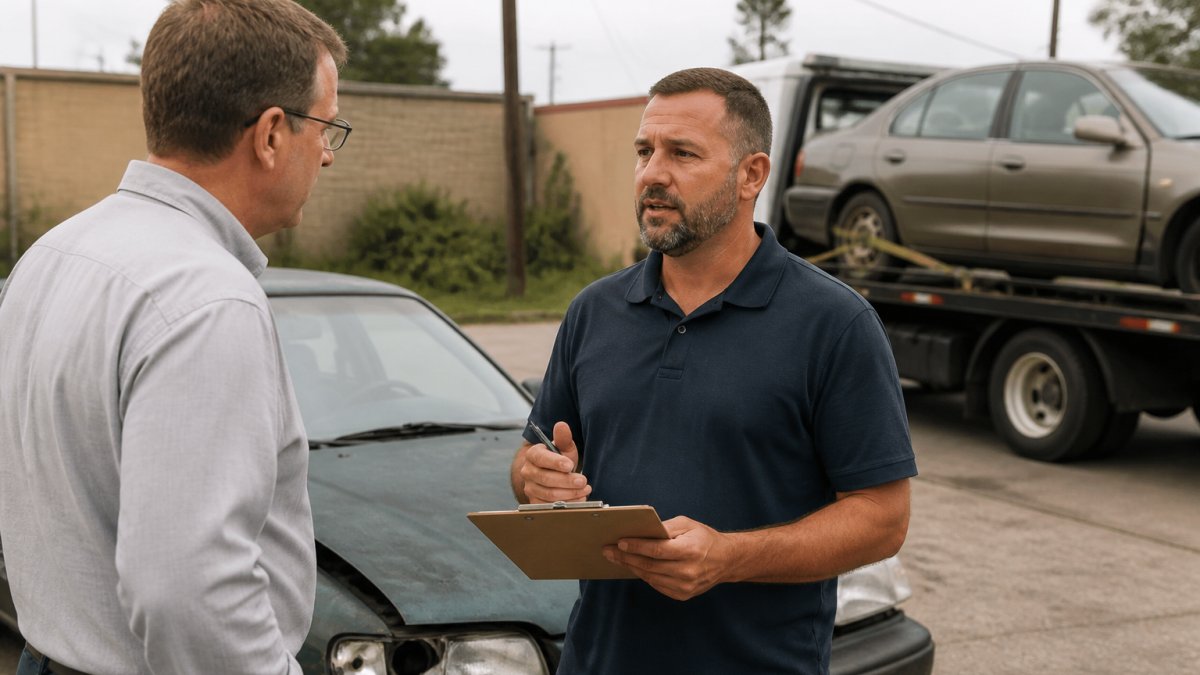
For payment safety, insist on payment at pickup, not a promise of a check in the mail, and get a signed receipt. If a quote sounds far above every other offer, treat it with suspicion, because bait-and-switch offers start high and drop at the door.
Watch Out Never hand over your keys or title before you have the cash in hand and the paperwork signed. Doing so leaves you with no use if the offer changes.
That is where a local buyer with a track record helps. One Houston customer, Conrad, noted that our driver spotted a second unused vehicle on-site, made a fair offer, and hauled both in one trip.
Frequently Asked Questions
What information do I need to get an instant quote for a junk vehicle?
You need the year, make, and model of the vehicle, its current condition (running, non-running, wrecked, flooded), and whether you have the title in hand. Location matters too, since pickup scheduling depends on where the vehicle sits. Missing details like VIN or title status do not block a quote, but they can change the final offer amount. Have your contact number ready so the buyer can confirm pickup time.
How do junk car buyers calculate an offer?
Buyers start with the scrap value, usually based on current metal prices and the vehicle's weight. Then they adjust for reusable parts, demand for that make and model, and towing distance. A junk car value calculator gives a rough ballpark, but real offers factor in condition details a calculator cannot see, such as a blown transmission or flood damage. That is why accurate vehicle details matter when you request a quote.
Can I sell a junk car without a title?
Many buyers do purchase vehicles without a title, but the process depends on state rules and proof of ownership. Expect to sign an affidavit or provide registration and ID in place of the title. Ask upfront whether the buyer handles no-title vehicles and what documents they require. Skipping that question can lead to a lower offer or a canceled pickup at the last minute.
Does a junk car quote include free towing?
With most reputable buyers, yes. Free towing is standard because the buyer resells or scraps the vehicle and absorbs transport as part of the deal. Confirm there are no hidden fees for winching, distance, or after-hours pickup before you accept. A no-cost pickup should be stated clearly in the quote, not added as a surprise on the day of retrieval.
Selling a junk vehicle should not mean chasing down tow trucks or haggling at the curb. Get your year, make, model, and condition ready, request a quote, and confirm the price holds before pickup. I Buy Junk Vehicles makes that simple with instant quotes, free towing, and cash on the spot, backed by more than a decade of local service. Get started with I Buy Junk Vehicles and turn that driveway space into cash today.
Get Quote
Comments